
Blog
By investing in accessible healthcare design, we can help reduce delays in care, improve patient safety, support earlier intervention during complications, and create spaces where every person feels that their health, and whatever path their pregnancy takes, matter.

“Trends in Healthcare” is a recurring series that focuses on exciting new designs and technologies we’re seeing in healthcare projects and provides best practices on how to ensure that these latest trends are accessible to persons with disabilities. We build on the wealth of knowledge we gain from working with healthcare design teams, construction crews, and practitioners to provide practical solutions for achieving accessible healthcare environments.
This edition shares a personal experience and reflection on one aspect of the women’s health space.
I have dedicated the past decade of my career to working with teams to incorporate accessibility into the design and construction process across all types of departments in hospitals. Over the years, I continually learn how evidence-based design decisions are incorporated into plans to meet program goals and help provide spaces that are both clinically efficient and promote good patient experiences.
Pregnancy has made me aware of the built environment as a patient more deeply than I ever imagined. Every appointment at the Obstetrician-Gynecologist (OB-GYN) office reminds me that my body is changing, my senses are amplified, and so much about the months ahead is a constant shift in biology and the unknown.
Whether someone views pregnancy as exciting, overwhelming, deeply wanted, unexpected, or somewhere in between, navigating health services during this time is intensely personal.
The design of a healthcare space can either support people during one of the most vulnerable times in their lives or subtly create barriers that add stress and, in some cases, contribute to preventable health crises.
Below, I’ll explore these three important aspects of accessible design for healthcare facilities from my perspective during my pregnancy:
Much of my recent medical experience has been about observation and prevention.
Everyone’s health is so individual, and medical practitioners work to provide the best patient care based on how patients present.
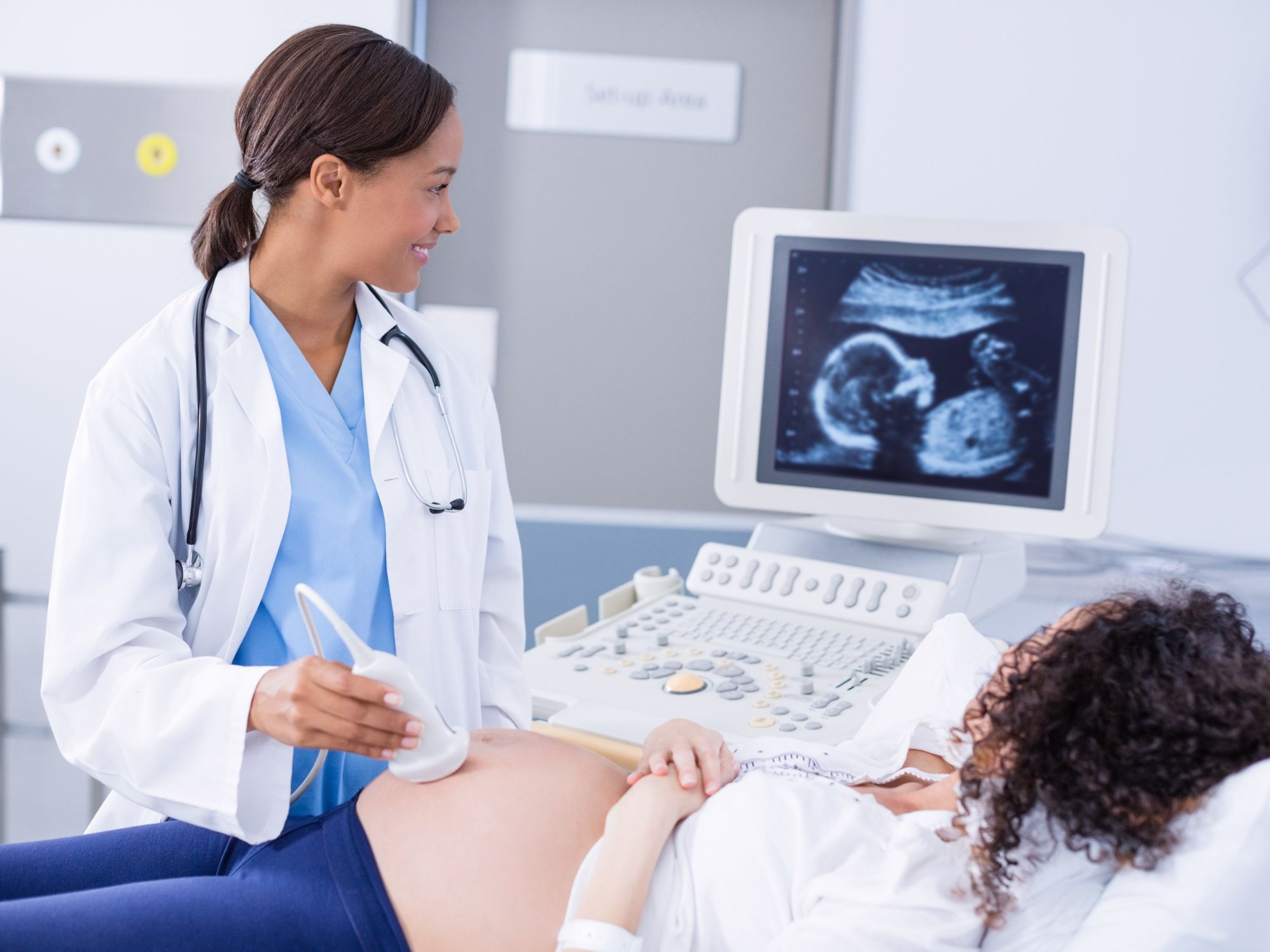
Two areas where there’s been consistent observation have been measuring my growth on a weight scale and measuring my baby’s growth via ultrasound while I’m in supine position on the exam table. These vital screening measures and diagnostic procedures are frequent and critical as they can inform practitioners if there may be other health conditions that need addressing or if interventions are necessary for the safety of the mother or child.
As my pregnancy has progressed, so too has it become harder to transfer onto and off the scale and the exam table. It has given me a small glimpse of the challenges that people with different abilities face during routine health check-ups.
Accessible exam tables and medical equipment must be available so that every patient can receive equitable care regardless of their physical abilities.
In the United States, there are about 36 million women, or 1 in 5, living with a disability.1 Millions of women struggle to access basic health care services like pelvic exams or mammograms due to systemic barriers such as inaccessible diagnostic equipment, limited transfer support, and communication challenges, which continue to restrict access to gynecologic and reproductive care. These obstacles can delay diagnoses, worsen health outcomes, and discourage patients from seeking the care they need.2
It is no wonder why the Department of Health and Human Services and the Department of Justice specifically mandated at least one accessible exam table and at least one wheelchair weight scale be provided by July 8, 2026 for facilities covered under Section 504 (entities participating in Medicaid, Medicare, or other grant / funding programs) and by August 9, 2026 for state and local government entities (covered under Title II of the Americans with Disabilities Act).3,4 This ensures that the most basic diagnostic equipment that is used widely across disciplines will be accessible.
As my pregnancy has progressed, I’ve noticed how much my physical abilities have changed. My standard 4.5-mph-NYC-walk has had to slow as walking longer distances leaves me winded. My balance isn’t what it used to be given my center of gravity shifting to accommodate the baby who is growing – what feels like exponentially – and swelling makes steps and tight rooms feel more intimidating as my spatial awareness is in a constant flux.
These aren’t unusual experiences; these are common parts of pregnancy.
Only now, being a patient, do I experience how clear circulation routes and design decisions can make a tremendous difference. Some of the most important elements include:
Accessibility becomes a matter of safety when pregnancy complications arise.
High blood pressure, severe swelling, bleeding, fainting, or reduced fetal movement can turn an ordinary appointment into an urgent situation. The last thing anyone experiencing these symptoms should face is navigating confusing building layouts, inaccessible entrances, or long walks between departments.
I’ve imagined how frightening it would be to arrive feeling that something was wrong, only to spend critical minutes searching for the correct elevator or waiting while heavy manual doors slowed my ability to consult with a medical professional.
In emergencies, thoughtful architectural design isn’t just convenient, it can save valuable time.
Pregnancy has taught me that none of us knows exactly how our journey will unfold. A routine prenatal visit can remain routine, or it can become an emergency the moment a complication is discovered. Every patient enters the building carrying their own hopes, concerns, medical history, and uncertainty.
Improving accessibility acknowledges the realities of the healthcare setting. It also benefits far more people than those who identify as disabled: parents accompanying young children, older family members, people recovering from injuries, patients with temporary mobility limitations, and healthcare workers transporting equipment all benefit from environments designed with accessibility in mind.
As I continue through the stages of my pregnancy, I have grown to appreciate that compassionate healthcare is not limited to the conversations I have with my providers. It begins the moment I arrive.
Every doorway, sign, accessible exam table, and thoughtfully designed waiting area communicates something about whether I was considered during the planning process.
Our accessibility consultants are here to help create accessible healthcare facilities. Reach out to us to get started.
Author: Jennifer Low, Senior Accessibility Consultant at SWA
Sources: