
Blog

Comprehensive Heating Upgrades for Two Pipe Steam Systems

|

A whole-system upgrade for two pipe steam systems is a powerful way to achieve immediate benefits and regulatory compliance in existing buildings while working toward future decarbonization goals. This is especially true when deep decarbonization is cost prohibitive or premature.

A white cast‑iron radiator with a visible valve connection, showing the metal fins and piping along the side.

When I used to leave the door open as a kid my mom would say “Are you trying to heat the whole neighborhood?” But in New York City, leaving windows open all winter is commonplace. It’s the only way some residents have of alleviating overheating.

Anyone who has lived or worked in a steam-heated building is familiar with the frustrations: banging pipes, waiting a long time for heat in some areas, while having to open windows to control overheating in others. Not only are occupants uncomfortable, but heating bills are higher than needed.

Energy doesn’t have to (literally) go out the window. A whole-system upgrade can fix overheating issues and result in 10-30% heating energy savings.

Through extensive research and real-world projects, SWA has developed best practices to improve two pipe steam systems, increase efficiency and resident comfort, lower maintenance costs, and properly assess the need for boiler plant replacement.

The verified results of this work show:

  • Significant heating energy savings
  • Reduction in near-term LL97 penalties

See the energy cost vs. savings section below for some example projects with actual post retrofit savings!

But what does it take to upgrade your steam heating distribution system?

This blog post is a follow-up to Retrofit Before Replacement: Why Boiler Upgrades Don’t Work for Many Large Buildings. It was originally published in February 2021. All information has been updated and verified by SWA engineers.

The Root Cause: Fixing the Distribution System

How do I fix a steam heating system? Do I need to replace the boiler?

Most people think a boiler replacement can improve system efficiency, but the root of the heating issues is often the distribution system, and the steam traps are the weakest link. When steam traps fail, it is difficult to control the amount of heat delivered to each space. This makes the space uncomfortable and causes residents to open windows, wasting fuel.

Steam traps are supposed to be tested at least every 3 years (some recommend annually [PDF]) to catch broken traps, but due to expense and logistics, this maintenance task is rarely completed.

Unfortunately, for some buildings a distribution upgrade can expose issues with back pitched pipes and radiators which can increase pipe banging.

Two Pipe Steam System Upgrades

A comprehensive, holistic approach is needed to truly fix a steam heating system.

The greatest savings and increases in comfort are realized when the entire package of work is installed together.

The Package:

Apartment Work

  • Install orifice plates at the inlet of each radiator
  • Add thermostatic radiator valves (TRVs)
  • While in the apartment, radiant barriers can be added as well

Distribution Work

  • Install high-capacity air vents
  • Fix piping issues and failed basement traps
  • Address “wet steam” issues

Controls Work

  • Install modern indoor temperature controls

Here’s how SWA optimizes these components:

Apartment Work

Install orifice plates

Much of the imbalance in two pipe steam systems starts with delicate steam traps. Orifice plates, installed at every heater, help balance the system and make steam traps redundant in these comprehensive multifamily retrofits.

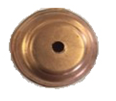
orifice plate

An orifice plate (pictured here) is about the size and shape of a bottle cap and fits snugly into a heater’s hand valve. A small hole in the plate restricts the flow of steam so that all of it condenses into water and no steam passes through the heater into the returns.

Once a building has converted to an orifice plate system, the heat output of the radiators can be adjusted by turning down the steam pressure during periods of mild weather or increasing the pressure when it is colder. When the output more closely matches the actual heating needs of occupants, the system doesn’t need to cycle on and off as frequently and residents experience a more gradual and comfortable heat flow.

Add thermostatic radiator valves (TRVs)

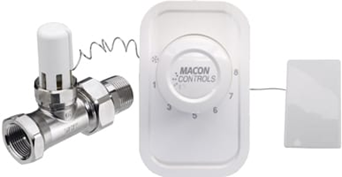
TRVs sense air temperature and mechanically restrict the flow of steam as needed to maintain comfort. Each room can be maintained at a different temperature, so every resident can set their own heat. TRVs should be installed onto each heater in place of the existing hand valve.

A Macon Controls EVOLZ Remote Sensor Thermostat Non-Electric Operator. This self-acting device is used for precise temperature control in HVAC systems without requiring electricity.

TRVs work poorly in systems with broken traps, so they have a mixed reputation (which we think is unfair!). When used with orifice plates rather than steam traps, they work extremely well and greatly increase comfort and efficiency.

Add radiant barriers (optional)

Radiant barriers are thin, reflective panels installed behind radiators to reduce heat loss through exterior walls. By reflecting radiant heat back into the room, these barriers help ensure that more of the heat generated by the radiator stays inside the living space, rather than escaping to the outdoors. While we do not know the energy savings of these barriers vs the other measures included here, this is a simple installation once you are accessing the radiator for the orifice plate and TRV work.

Distribution Work

Install high-capacity air vents

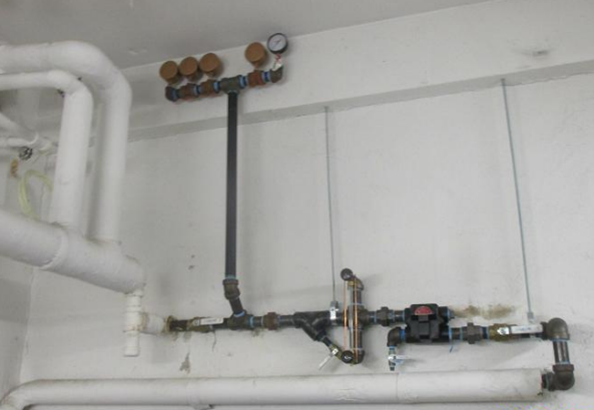
Proper venting at the ends of the mains and at the top of the risers ensures steam reaches every apartment at around the same time.

Piping assembly on an interior wall showing multiple steam system components, including air vents mounted at the top of a vertical pipe and additional valves and fittings along the horizontal piping below.

When a steam cycle ends, air fills the pipes and radiators. When the boiler starts again, the expanding steam must push the air out so that steam can reach the radiators. Insufficient venting traps the air in place and prevents the steam from getting to all the apartments quickly.

The farther an apartment is from the boiler, the longer it takes the air to be vented from the supply piping, which results in underheating. These residents often complain, and the superintendent (trying to be helpful) will increase the boiler settings; then the apartments close to the boiler get overheated and these residents open their windows for some relief.

The solution is to install very high-capacity air vents to push the air out quickly at the ends of the main distribution piping in the basement and at the tops of the risers.

Fix piping issues and maintain basement traps

Proper distribution piping and functional basement steam traps are essential. Over time, piping can sag or become back pitched and basement steam traps can fail.

Basement steam traps help remove condensate from the distribution piping and prevent steam from escaping into the returns. If these traps fail, condensate can accumulate, causing water hammer, reduced heating performance, and accelerated wear on the boiler and piping. Regular maintenance including testing and timely replacement of failed traps is necessary to keep the system balanced and operating efficiently.

In addition to maintaining traps, it’s important to address any piping issues promptly.

Address “wet steam” issues

All steam heating systems need dry steam: steam with few entrained water droplets for optimal operation. Wet steam causes water hammer (clanging pipes), squirting vents, and water accumulation at the ends of steam mains. Water accumulation blocks steam from reaching apartments; then tenants complain, the heat gets turned up, and most of the building becomes overheated.

When the heater and distribution work is complete, the boiler should be cleaned using detergent or boiled out.

Other dry steam measures include limiting the firing rate for the burner, keeping chemical water treatment to the very minimum (or eliminate and use anode bars instead), and lowering the water level of the boiler as much as possible.

Controls Work

Install modern indoor temperature controls

Most existing controls for two pipe steam systems respond to outdoor temperature. They have no idea if the apartments are hot or cold, and they overheat the buildings in mild weather. A new control system that monitors the indoor temperature in multiple apartments and supplies heat only as needed should be installed as well. This can provide more stable temperatures, which can improve resident comfort and maximize energy savings.

Cost of Upgrades vs. Energy Savings

How much will I save with steam heating upgrades? Is it worth the cost?

Savings

Based on previous experience working on over a dozen full comprehensive steam heating plant upgrades, and dozens of steam assessments, the projected energy savings for steam heating upgrades is 10%-30%. The range of savings is dependent upon factors such as pre-retrofit energy use and post-retrofit building operation.

Below are a few examples of SWA’s projects showing actual post-retrofit heating energy savings and LL97 fine reduction.

Annual LL97 Fine Projection  Phase 1 (2024)Annual LL97 Fine Projection Phase 2 (2030)
Property DescriptionHeating Energy SavingsPre-RetrofitPost-RetrofitPre-RetrofitPost-Retrofit
Building 1
2,000,000 SF Multifamily Campus with Commercial
26%$0$0$412,000$0
Building 2
170,000 SF Multifamily with Commercial
22%$70,700$0$205,600$34,450
Building 3
191,000 SF Multifamily
13%$5,200$0$113,000$72,450

Installation Costs

Construction costs range between $700-$1,500 per apartment. The main variables affecting project cost include the use of in-house building staff labor versus an outside contractor (for apartment work), as well as the extent of the basement distribution work required.

Regulatory Compliance

Graphic showing the text “80% by 2050” over a close‑up image of a red brick building with a window and a metal fire escape. Additional text reads “#NYCBuiltToLast nyc.gov/builttolast.”

New York City’s Local Law 87 requires steam traps to be tested and failed traps to be replaced at least once every 10 years to demonstrate compliance. The comprehensive steam heating upgrade eliminates the need for steam traps at the radiators, simplifying LL87 compliance.

In addition, this scope of work can support compliance with Local Law 97 carbon emissions limits, by reducing on site energy consumption and emissions.

Final Thoughts

Holistic upgrades to steam heating distribution systems reduce operational carbon emissions without depleting capital funds for long term strategic decarbonization roadmaps.

We often help building owners navigate the complexities of building retrofits to ensure that every project maximizes value and aligns with local carbon reduction mandates. Contact us to get started.

Contributors: Carson Bryan, Building Systems Analyst; William Kalbacker, Senior Mechanical Engineer; Kelly Westby, Managing Director, Building Operations, Decarbonization, and Efficiency